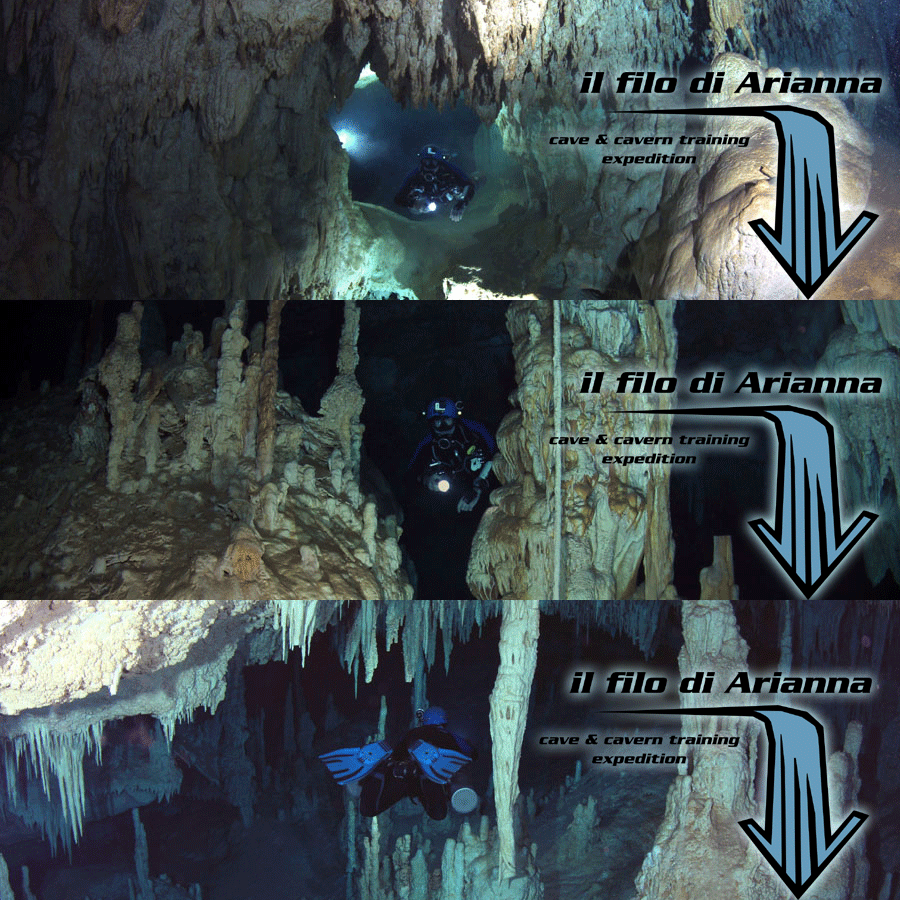
I met Professor Bradley Russell at the end of 2014; introduced to me by Bil Phillips, I was Bradley's instructor for his cave diving course.
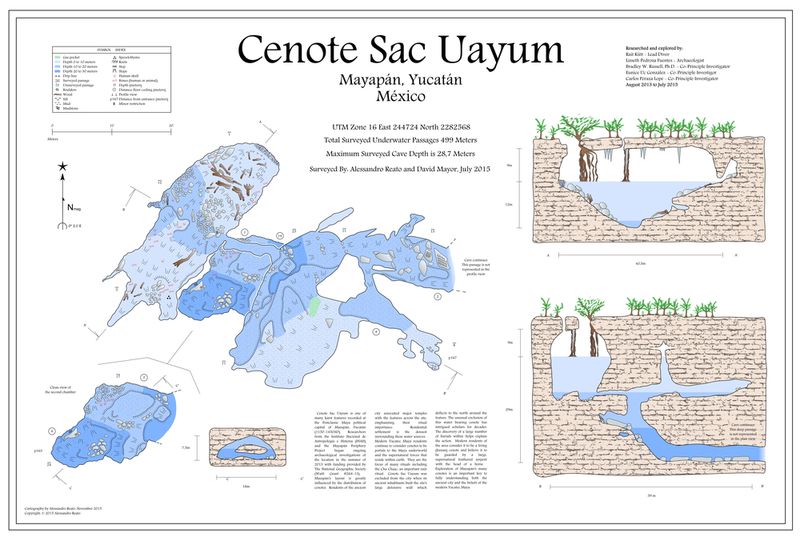
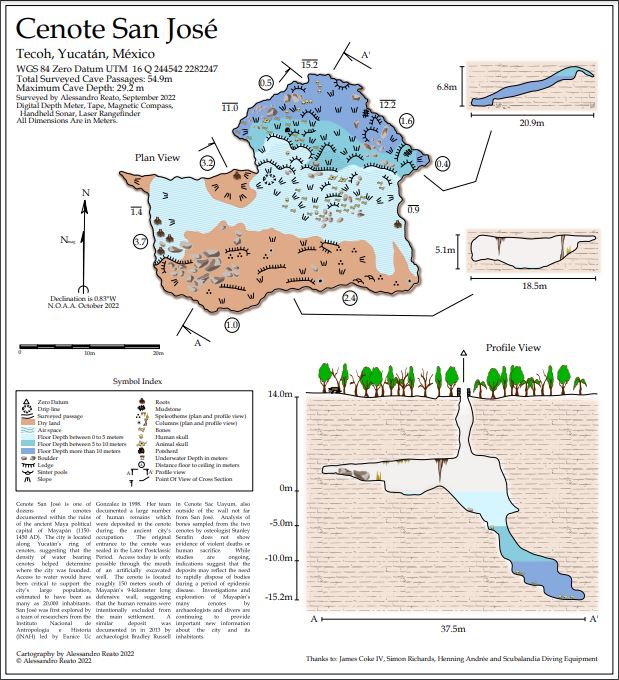
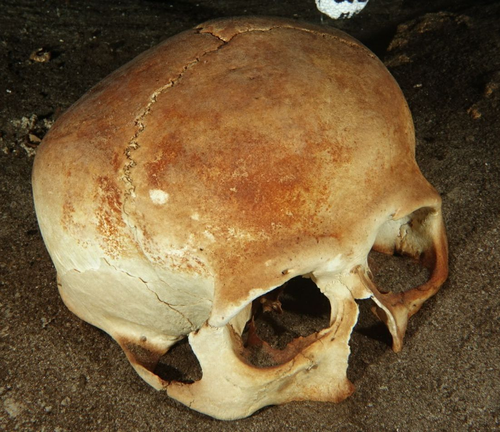
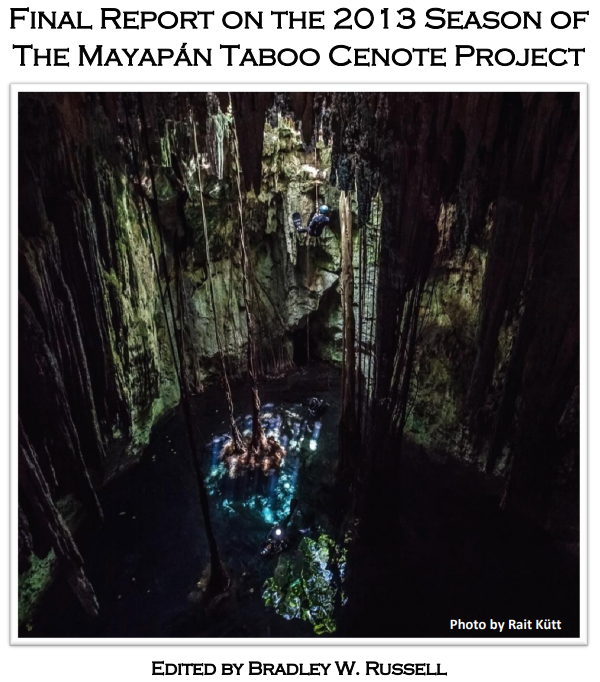
To complete his current study he had to learn the basics of cave diving since his research in the fortified city of Mayapán had led him to discover numerous human remains submerged in the waters of the taboo cenotes of Sac Uayum and San Josè.
Mayapán was one of the most important political capitals of the Maya civilization in its Post Classic period, between 1150 and 1450 AD. and its study was carried out by an international group of archaeologists from Mexico and the United States... (continue reading)
The well preserved ruins of Mayapán (1150-1450), located 40km southeast of Merida, are what remain of the primate political center of the Maya Lowlands throughout the Late Postclassic Period (Figures 1.1 and 1.2). Mayapán’s power is reflected in its unusual size and density. The Atlas arqueológico del estado de Yucatán (Garza and Kurjack 1980) lists it as the largest contemporary center of the region by an order of magnitude.
Population estimates for the site suggest as many as 17,000 people resided there (Russell 2008:486-487), supported by dozens of water bearing caves and sinkholes (collapse dolines) (Brown 2005, 2006). A high concentration of these features results from Mayapán’s location just inside the Chicxulub Crater, along the “Ring of Cenotes” (Brown 2006; Pope, Ocampo and Duller 1993) (continue reading)...